
Resilience beyond the wheelchair
Living with frustration, rediscovering purpose – and why understanding someone’s inner reality matters.
As our Purple Tuesday campaign draws to a close, we’re sharing one final resident story. Craig’s experience highlights the realities of living with disability, the everyday barriers people can face, and the practical steps we can all take to help create more inclusive, supportive communities.
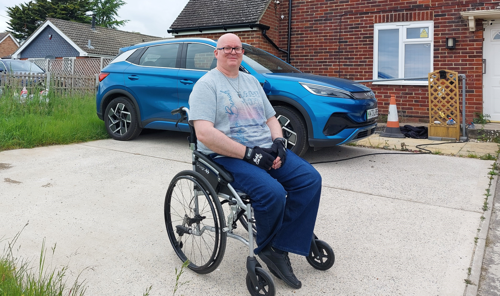
Craig Clackett is an Eastlight resident, father of four, talented drone photographer, and valued member of our Customer Influence Committee (CIC). He is also a wheelchair user living with chronic pain and tinnitus – along with the lasting emotional and practical effects of a past brain cyst that once caused significant memory difficulties.
His journey began with a traumatic assault at age 17, which fractured his spine and gradually reduced his mobility. Determined to keep learning, he rebuilt his career multiple times: first as an electrician, then (after retraining) teaching adult learners with disabilities – before going on to teach accountancy, as well as several other roles in between.
“I’ve always been on the go,” Craig says. “If I’ve wanted to learn something, I’ve always done it. But being in a wheelchair holds that back – and that’s what causes the frustration.”
When positivity hides the pressure
Craig is known for his upbeat nature, but he says this doesn’t tell the full story.
“I’m always chirpy, always happy – but deep down, there’s another side to you. You can feel frustrated and angry. Sometimes, you go home, sit down – and it hits you.”
What he hopes colleagues understand isn’t simply his disability, but the emotional impact behind it.
“You don’t want sympathy. You just want people to realise you can feel frustrated.”
Small moments of thoughtfulness can be transformative. Craig recalls a recent repair visit from Eastlight’s Home Solutions Team:
“The staff member said to me: ‘I can see you want to do it yourself.’ He was right! I told him I used to be an electrician, but can’t reach high enough anymore. He then asked if there was anything else I needed doing – and changed a bulb for me during his own breaktime. That meant a lot.”
The hidden obstacles – and how we can help remove them
Daily tasks can become complicated when people don’t fully understand the realities of using a wheelchair. Craig gives the example of parking and road safety:
“People don’t understand. They don’t give you a chance to explain. You’ve got your disabled badge in the window, but they’re not always looking out for it.”
He explains this can lead to arguments or assumptions when he needs more space to get in and out of his car. Similarly, navigating kerbs or tight gaps can be stressful and exhausting. With a manual chair, “it’s hard work.”
Craig also lives with chronic tinnitus, which can make noisy environments overpowering.
“When the outside noise gets louder, the ringing in your head gets louder too. Sometimes you feel like you’re going crazy – it can be really overwhelming.”
Simple steps – microphones in meetings, checking in with attendees, reducing background noise – can help.
Hidden disabilities are another area close to his heart, having supported his daughters through their own learning challenges. He encourages colleagues to consider whether there may be an unseen reason behind someone’s behaviour.
Purpose, pride and looking ahead
Despite the challenges he faces, Craig is rightly proud of what he has achieved and of the life he has built for his daughters. He reflects on the grit, determination and work ethic that have shaped his journey:
“I’ve always been a hard worker. Work has always been a focus for me – it helped me change and make a better life for me and my girls. I’ve done lots of different jobs, and I’m proud of the career experience I’ve built.”
His passion for drone photography helps him stay creative and connected.
“When you’ve got a mobility issue, using a drone is a good way around the restrictions.”
Craig’s role on Eastlight’s Customer Influence Committee has supported him through difficult periods and given him purpose. He is particularly hopeful about the impact of place-based working for residents of all abilities:
“It should help improve communication and ensure things are followed through. We’ll be focusing on that in the Customer Influence Committee.”
His closing message to our teams is simple and powerful:
“Just sit back and ask yourself: ‘How would I be in their shoes? Is there a reason behind their behaviour?’ That’s something we need to do more often in society.”
A huge thank you to Craig for opening up about his experience and sharing these invaluable insights.
Read more (click on the links below):