
• EASTL(010825)21

    What to expect from us

    As your landlord, it is our responsibility to ensure your home is safe.

    Awaab's Law is named in memory of two-year-old Awaab Ishak, who tragically died due to mould in his home in 2020. 

    Phase One of Awaab’s Law came into effect in October 2025, and means we must respond to reports of damp and mould within strict timescales.

    Phase Two of Awaab’s Law comes into effect on 30 November 2026.

    This means that we must also respond to reports of additional home safety hazards within the same timeframes.

  • EASTL(010825)83

    Our timescales

    When you report damp, mould or other home safety hazards to us, we will:

    • When you report damp, mould or other home safety hazards to us, we will:
    • Address all emergency issues within 24 hours
    • Investigate non-urgent issues within 10 working days
    • Where applicable, clean areas affected by damp and mould
    • Where applicable, check the levels of damp, moisture and humidity in your home
    • Where applicable, complete minor repairs, if we can, and book any further repairs that cannot be completed
    • Contact you within three days of visiting your home with a summary and any next steps.

Home safety hazards

  • Damp and mould

    See more below.

  • Excess cold

    Inadequate heating, insulation or indoor temperatures that could lead to hypothermia, cardiovascular or respiratory problems.

  • Excess heat

    High indoor temperatures that increase the risk of heat exhaustion, dehydration or heat stroke.

  • Falls associated with baths, showers or toilets

    Risk of falling due to poor design, lack of grab rails, slippery surfaces and poor layout in washing or toilet facilities.

  • Falls on levels surfaces

    Slips and trips caused by uneven floors, loose coverings or poor maintenance.

  • Falls on stairs and between levels

    Risk of falls due to unsafe stair design, broken steps, poor lighting or missing handrails.

  • Structural collapse, falling elements or explosions

    Risk of building failure, falling masonry, subsidence or explosion (e.g. gas-related).

  • Fire

    Increased likelihood of injury or death from fire due to poor detection, means of escape or fire spread.

  • Electrical hazards

    Risk of electric shock, burns, or fire from unsafe or defective electrical installations.

  • Domestic hygiene, pests and refuse

    Poor sanitation, pest infestation or refuse storage that can cause infection or disease.

  • Personal hygiene, sanitation and drainage

    Lack of adequate washing, toilet or drainage facilities leading to health risks.

  • Food safety

    Unsafe or inadequate kitchen facilities affecting safe food storage, preparation or cooking.

  • Adobestock 127694975

    Causes and types of damp and mould

    Damp and mould can arise from a variety of sources but identifying the root cause is not always straightforward. Below are the most common types:

    • Penetrating damp occurs when water enters your home due to a structural defect. Common causes include roof leaks, damaged or poorly sealed windows and faulty or blocked guttering. If penetrating damp is identified, we will investigate the issue thoroughly and carry out the necessary repairs to resolve it.
    • Internal leaks from plumbing fixtures, such as sinks, baths or pipework, can lead to damp patches and mould growth. Our team can assess and repair these issues to prevent further damage.
    • Condensation forms when warm, moist air comes into contact with cold surfaces, such as windows or walls. This is a frequent cause of damp in homes, particularly in areas with poor ventilation. Managing condensation often involves improving airflow and reducing indoor humidity levels.


Spotting the signs of damp and mould

  • A musty smell

  • Condensation on windows

  • Lifting or peeling wallpaper

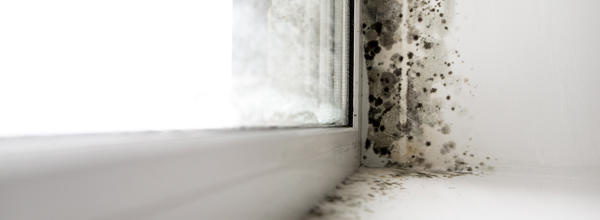
  • Black or green patches on walls and ceilings

  • Damp surfaces like walls and windows

  • Rotting woodwork like skirting boards

  • Evidence of water damage

Tips to prevent damp and mould

  • Report repairs needed

    If you need to find any leaks or repairs needed in your home, please contact us so we can solve them quickly.

  • Crack open a window every day and let the sunshine in

    Even if it's just for a few minutes, opening a window will let old air out and new, fresh air in to aerate your home. It's also important to open your curtains to help keep your home dry and bright. Don't forget to keep your trickle vents open and clear of any blockages too.

  • Wipe away condensation and use a mould spray

    Condensation on windows can be wiped away to prevent it from building up and turning into damp. Use a mould and mildew spray on mould to clean it, just make sure to read the label first.

  • Cooking or showering?

    Pop the windows open, shut the doors and switch on the extractor fan if you’ve got one. Using lids on pots when cooking also helps to reduce steam moisture in the air.

  • Keep you home at a steady temperature

    We know this may be difficult at times, but keeping your home at a steady temperature helps to prevent condensation and mould. Somewhere between 18 and 21 degrees Celsius is best. If you're not sure how your heating works, don’t be afraid to ask someone to show you how to use it properly.

  • Drying your clothes inside

    When you're unable to dry your clothes outside, use a clothes horse in the bathroom, close the door and turn on the fan or open a window to stop moisture building up. Please keep the areas around your radiators or other heaters clear so they can heat the entire room.

Report damp, mould and other hazards on My Eastlight portal

Report damp, mould and other hazards

If you need any support to complete this online form, or would rather contact us a different way, such as the new My Eastlight portal and app, please click here to get in touch.

Here at Eastlight, we take the protection of your data seriously. The information you provide in this form will be used to investigate and arrange action to address damp, mould and other safety hazards in your home. We will handle your data in accordance with our privacy notice and data protection laws. For more details on how Eastlight processes your personal data, please see out Privacy Notice here.

Is any essential part of the home unsafe or unusable because of the problem? *
Does anyone living in the property belong to any of the following groups? *
Has the issue already affected anyone's health? *
Can you describe the extent of the issue and how much of the property is affected? *
Are there any signs that the issue could become dangerous if not addressed quickly? *
Do you feel it is unsafe for you or your household to remain in the property because of this issue? *
Have you had to stop using certain rooms, stay elsewhere, or significantly change how you live because of the issue? *